

Are you concerned that your furry friend might have Cushing's disease? Let’s walk through what it is, the key symptoms to look for, and the natural support options available to help your pet feel more comfortable.
What is Cushing's Disease?
Cushing's Disease, also known as Hyperadrenocorticism, occurs when the adrenal glands produce excessive amounts of cortisol. This hormone is essential for life, but when produced in excess, it can disrupt multiple body systems.
Cushing’s is the most common endocrine disorder in dogs, especially in middle‑aged and older dogs. Any dog can develop it, but it is more frequently seen in:
- Poodles
- Dachshunds
- Boxers
- Terriers
Cushing’s can also occur in horses, and less commonly in cats.
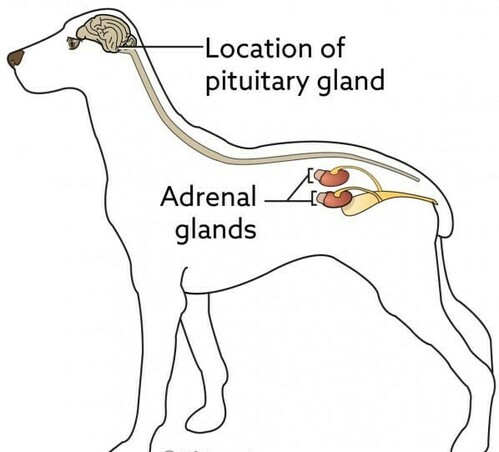
What causes Cushing's in dogs?
1. Pituitary‑Dependent Hyperadrenocorticism (PDH)
This accounts for around 85% of cases. A small benign tumour forms on the pituitary gland, causing excessive production of ACTH - which then overstimulates the adrenal glands to produce too much cortisol.
2. Adrenal‑Dependent Hyperadrenocorticism (ADH)
A tumour develops directly on one adrenal gland. It may be benign or malignant. This form does not involve ACTH but still results in excessive cortisol production.
3. Iatrogenic Cushing’s
This occurs when an animal has been given long‑term steroid medication. Once steroids are discontinued, it can take time for the adrenal glands to resume normal cortisol production. This is why animals must be weaned off steroids gradually.
4. Cushing‑Like Symptoms Without Cushing’s Disease
It’s also important to know that many dogs show Cushing‑like symptoms without actually having Cushing’s disease. Increased thirst, panting, coat thinning, pot‑bellied appearance, and fatigue can also occur when the adrenal glands are in a state of overdrive. This can happen due to chronic stress, inflammation, long‑term metabolic strain, or endocrine imbalance. In these cases, the dog may look very similar to a Cushing’s dog, but blood tests come back normal. These dogs often benefit from gentle adrenal and vitality support to help bring the body back into balance.
What happens to the body?
Cortisol is essential to life because it supports many body systems. With increased levels of cortisol, these systems develop functional disturbances that include:
- Gluconeogenic - converts glucose to glycogen to be stored in the liver and muscles, making the liver work harder.
- Lipolytic - which affects the breakdown of fats.
- Protein catabolic - which affects the breakdown of protein into amino acids.
- Increases in blood flowing to the kidney, more workload put on the kidney.
- Atrophy of the sebaceous glands and hair follicles causes alopecia.
- Affects the anti-inflammatory process, suppressing the immune system and minimising the body's reaction to inflammation.
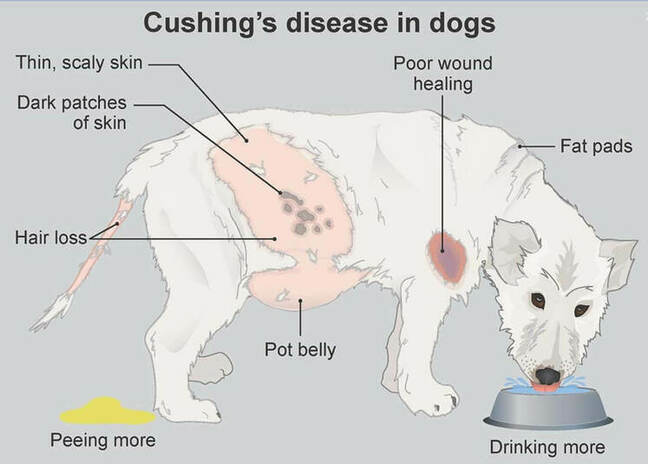
Cushing's Disease symptoms
Cushing's disease can cause a range of symptoms. Your pet may develop one or more of the following:
- Increased appetite
- Increased thirst
- Frequent urination
- Enlarged abdomen (potbellied)
- Loss of hair
- Thinning of the skin
- Panting
- Lethargic
- Recurrent urinary tract infections
Natural Support Options for Cushing’s Disease
Many pet owners look for gentle, natural ways to support their pet’s comfort and wellbeing. At Natural Pet, we offer two complementary options that work beautifully together:
Cush Rx is a gentle homeopathic blend designed to support dogs and cats showing symptoms commonly associated with Cushing’s disease. It is used to support:
- Thirst and urination changes
- Coat thinning
- Energy and vitality
- Comfort and balance
- Non‑toxic
- Safe for long‑term use
- Affordable (only $27.50 for ~1.5 months)
- Easy to administer
- Suitable for dogs, cats, and horses
You can read customer experiences in the reviews tab on the product page.
CushVitality Canine - whole-food nutritional support
To complement Cush Rx, we created CushVitality Canine, a whole‑food nutritional blend designed to support dogs experiencing adrenal imbalance or Cushing’s‑type symptoms.
It provides gentle, steady nourishment through:
- NZ grass‑fed organ ingredients
- Marine nutrients
- Functional mushrooms
- Botanicals traditionally used for balance and resilience
- Whole‑food sources like bone broth, nutritional yeast, and kumara
CushVitality Canine supports:
- Adrenal and endocrine balance
- Coat health and skin comfort
- Digestive and metabolic wellbeing
- Overall vitality and resilience
- It is ideal for dogs needing daily nutritional support.
Why Use CushRx and CushVitality Together?
These two products were designed to complement each other:
CushRx - Supports comfort, balance, and Cushing’s‑type symptoms.
CushVitality Canine - Provides whole‑food nourishment to support adrenal, endocrine, and metabolic health.
Together, they create a holistic, gentle, long‑term support system for dogs showing signs of Cushing’s disease.
Many owners report the best results when using both.
FAQs
What breeds of dogs are more prone to developing Cushing"s Disease?
Studies show that any breed of dog can be affected by Cushing"s Disease. However, it is most likely to be found in poodles, dachshunds, boxers, and terrier breeds. These breeds are particularly susceptible to defects related to this condition. For instance, characteristic symptoms like hair loss and pot-bellied shape often appear with the disease in dogs of these specific types. As such, owners may want to take extra precautions when it comes to understanding how their particular breed is affected by Cushing's Disease in dogs.
How is Cushing"s Disease diagnosed in dogs?
Cushing"s Disease in dogs is typically diagnosed through a combination of blood tests, urine tests, and imaging studies such as X-rays, ultrasounds, or scans. Your vet may also perform an ACTH stimulation test or low-dose dexamethasone suppression test to confirm the diagnosis.
Can Cushing"s Disease be cured in dogs?
While there is no cure for Cushing"s Disease in dogs, it can be managed through natural remedies, dietary changes, and other supportive care measures. With proper management, many dogs can live happy and healthy lives with Cushing's Disease.
Tags:
Dogs


 Earn loyalty points everytime you shop


